Content Ownership in OnlyFans Agency Deals
If you’re considering an OnlyFans management agency, content ownership is the one topic you can’t afford to “assume is fine.” A lot of creators only discover...
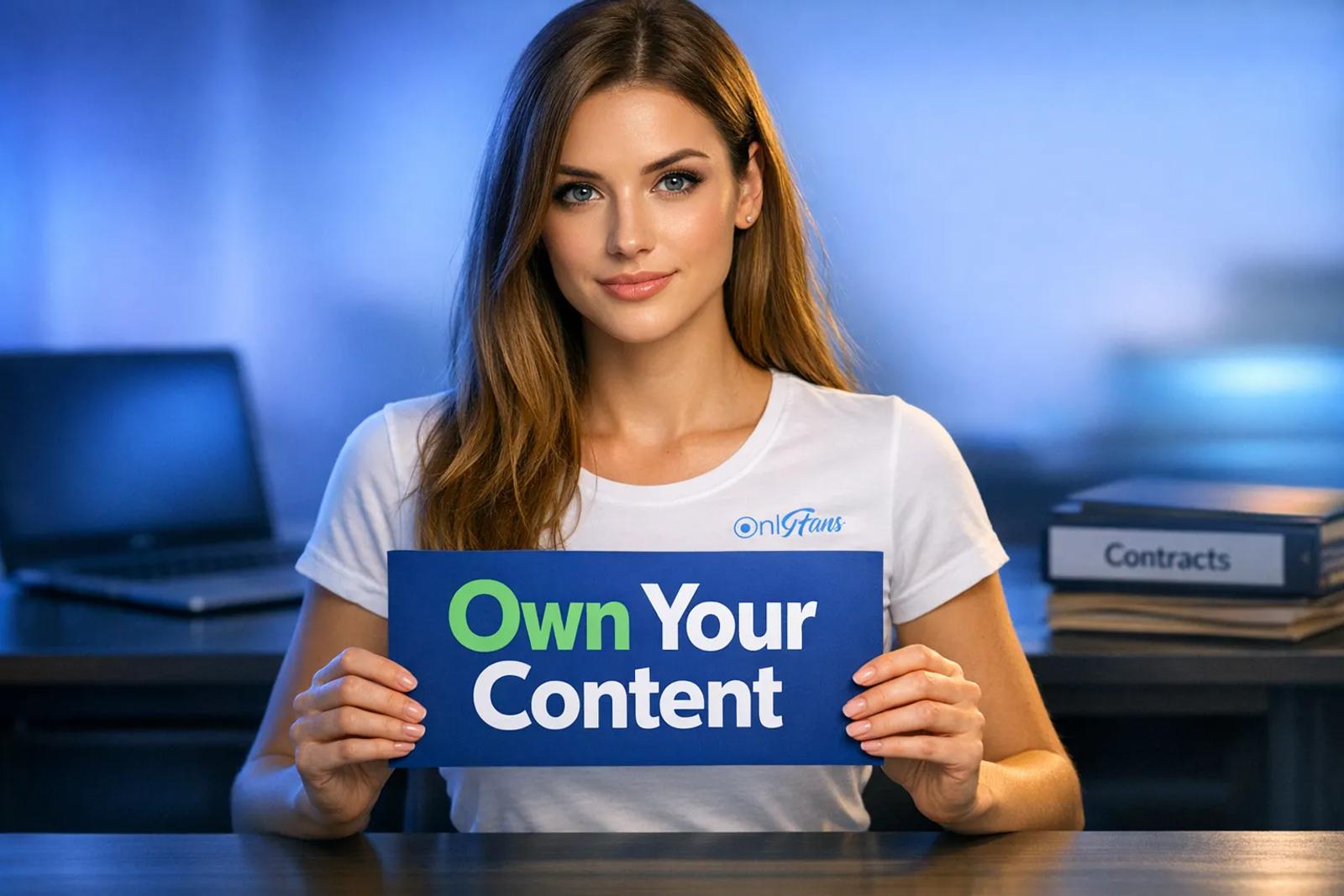
If you’re considering an OnlyFans management agency, content ownership is the one topic you can’t afford to “assume is fine.” A lot of creators only discover the problem when they want to switch agencies, rebrand, or remove old content and suddenly someone else claims rights to their photos, videos, social handles, or even their customer lists.
This guide breaks down what “content ownership in OnlyFans agency deals” really means, the clauses that matter, common traps, and a negotiation checklist so you can protect your work without killing a good partnership.
Educational only, not legal advice. Contracts and laws vary by country and state, and platform policies can change. If you’re unsure, verify with official sources or a qualified attorney.
What “content ownership” actually includes (it’s bigger than your videos)
When creators hear “ownership,” they usually think: my nude content is mine. That’s a good start, but agency deals often touch a wider set of assets.
Here are the buckets you should think about before you sign anything:
1) Your content library
- Photos, videos, livestream recordings
- Raw files (un-edited footage, original images)
- Edits (color grading, captions, cropping)
- Thumbnails, banners, and promotional teaser clips
2) Your identity and brand assets
- Stage name and logo
- Watermark and visual style
- Bio text, “menu” copy, and messaging scripts
- Your likeness and voice (this matters for promo, ads, and reposts)
3) Your accounts and access
- OnlyFans account ownership and login control
- Social accounts used for promotion (X, Reddit accounts, Instagram, TikTok, link hub)
- Two-factor authentication (2FA) and recovery email/phone
4) Your audience data and sales systems
- Subscriber lists and segmentation notes
- DM flows, PPV offers, pricing tests, and performance analytics
- Promo relationships (SFS partners, collab contacts)
Some of these assets are “obvious” to you because you built them. But in a contract, what’s obvious doesn’t matter as much as what’s written.
The default rule: you usually own what you create, until you sign it away
In many places, the person who creates original content generally holds copyright by default, unless rights are transferred in writing or it qualifies as a specific legal exception (for example, certain “work made for hire” arrangements in the US).
If you want to read the baseline definition, the US Copyright Office explains what copyright protects and why written agreements matter.
What changes in agency deals is not the platform, it’s the paperwork.
The 3 common ownership models you’ll see in OnlyFans agency deals
Agencies structure this in different ways. Some are creator-first, some are aggressive, and some are simply sloppy.
| Model | What it means in plain English | Creator risk level | When it can be OK |
|---|---|---|---|
| Creator owns everything, agency gets a limited license | You keep ownership, agency can use content only to manage and market you during the contract | Low | Best default for most creators |
| Agency owns edits or “derivative works” | You own the originals, but the agency claims ownership of edited versions, captions, thumbnails, or promo videos | Medium | Sometimes acceptable if you get guaranteed access and transfer rights on exit |
| Agency owns content and/or brand assets | Agency claims full ownership or broad rights to reuse your content/likeness even after you leave | High | Rarely worth it, except very specific production financing with strong legal review |
If an agency says, “Don’t worry, we’d never do that,” your response should be: “Perfect, then you won’t mind putting the limits in writing.”
The clauses that decide whether you keep your content
Below are the contract sections where creators lose control most often.
Content ownership vs. content license
Look for language like:
- Assignment of rights (dangerous if it’s broad)
- “All content created during the term belongs to…”
- “Creator irrevocably transfers…”
A safer structure is usually:
- Creator retains ownership
- Agency receives a revocable, limited license to use content only for management and promotion
- License ends automatically at termination
If an agency needs rights to post and promote, a license is enough. They do not need ownership to do legitimate marketing.
“Derivative works” and editing ownership
This is the sneaky one.
If an agency edits your videos, adds captions, cuts teasers, or creates promo packs, they might claim those edits are “derivative works” and therefore theirs.
If you’re okay with the agency doing editing, you can still protect yourself by ensuring:
- You have access to all final exports
- You can keep using the edits after termination
- The agency cannot resell or reuse your edits for other creators
Likeness, name, and promotional rights
This is often written as “right of publicity” or “use of name/likeness.”
Reasonable:
- Using your promo content to market your account while you work together
Not reasonable:
- Using your face/body/voice in ads indefinitely
- Using your content to promote the agency itself after you leave, without your consent
Ask for:
- Term-limited promotional rights
- Removal obligations (what gets taken down and by when)
- Approval rights for paid ads (optional, but powerful)
Account ownership and access control
This part is not glamorous, but it’s where creators get trapped.
You want it crystal clear that:
- The OnlyFans account is yours
- The email and phone number on the account are yours
- You keep 2FA and recovery access
If an agency insists on controlling login and security, that’s a major power imbalance. Even if they are honest, it creates a single point of failure.
If you want extra safety guidance, read Lookstars’ breakdown of common fraud patterns in OnlyFans agency scams.
Exclusivity clauses (hidden ownership pressure)
Exclusivity is not always bad, but it can quietly function like ownership if it:
- Blocks you from posting your own content elsewhere
- Claims the right to manage “all adult content income”
- Gives them rights to any content you create on other platforms
If you plan to diversify (Fansly, Fanvue, OFTV, clip stores), exclusivity needs to be narrow and specific.
Termination and exit clauses (where most creators lose their library)
Even if ownership is written well, you still need an exit plan.
Look for:
- How quickly you can terminate
- What happens to drafts, content vaults, and promo assets
- Whether the agency must transfer social accounts, domains, and link hubs
- A timeline for returning access and deleting agency copies
A fair deal makes leaving boring.
Red flags that usually signal an ownership grab
If you see any of these, slow down.
- The contract says the agency owns “all content created during the term”
- There is no clear definition of “content” (so it could include your selfies, your socials, everything)
- “Perpetual,” “irrevocable,” or “worldwide” rights with no end date
- The agency keeps the email, phone, or 2FA for your accounts
- They refuse to send the contract before you “pay a deposit” or “start onboarding”
- They won’t jump on a call to explain the agreement
For more general warning signs, pair this article with Lookstars’ checklist: 6 red flags to watch out for before signing with an OnlyFans agency.
Decision framework: when to accept a license, and when to walk away
Use this simple framework to decide what’s reasonable.
A limited content license makes sense when
- The agency needs to repost teasers on social platforms
- They need to schedule and publish your content on your accounts
- They need to run DM campaigns using your existing media
The key is that the license is narrow, time-limited, and tied to services.
Partial ownership of edits might make sense when
- The agency is doing heavy post-production (not just cropping)
- You negotiate continued usage rights after termination
- You receive all exports and project files you need
If you cannot keep using the edited assets, you are paying to build someone else’s library.
Full ownership almost never makes sense when
- Your brand is your long-term plan
- You have a face, a recognizable niche, or a unique style
- You want the ability to switch teams
If you are financing a big production (studio, crew, major ad spend) and someone is asking for ownership, that’s a situation for real legal review and very specific terms.
Checklist: what to ask before you sign (copy/paste)
Use these questions as your pre-signing script on a call.
- Do I retain ownership of all original content I create, including during the contract term?
- Is your right to use my content a license (not an assignment), and does it end when the contract ends?
- Do you claim ownership of edits, captions, thumbnails, or promo clips? If yes, do I still have unlimited rights to use them after termination?
- Can you use my likeness/name for ads or agency promotion after we stop working together? If yes, for how long, and can I revoke it?
- Who controls the OnlyFans login, the email, and 2FA?
- What happens to my social accounts and link hubs if we terminate?
- Do I get a full export of assets (content vault, promos, analytics summary, chat scripts) on exit?
- What is the deletion policy for your copies of my content after termination?
- Is there exclusivity, and does it apply to other platforms (Fansly, Fanvue, clip stores)?
- Can you show me the exact clause that answers each of the above?
If an agency can’t answer these cleanly, that’s not a “miscommunication.” It’s a risk.

A creator-first contract template (plain-English version)
You can’t replace legal drafting with a blog post, but you can use this as a negotiation target.
The ownership standard you want
- Creator owns all original content, brand assets, and accounts.
- Agency receives a non-exclusive, limited license to use content only to manage, market, and operate the creator’s pages.
- License is revocable and automatically ends at termination.
- Agency cannot sell, sublicense, or reuse the content for other creators.
The exit standard you want
- Immediate return of account access (email, 2FA, passwords) at termination
- A defined timeline for takedown of agency-run promo pages that use your likeness
- Delivery of an asset package (edits, promo exports, copy, analytics summary)
If you want to go deeper on whether outsourcing is worth it financially, read: Are OnlyFans agencies worth it? A detailed review.
What about photographers, videographers, and collaborators?
Even if your agency deal is perfect, you can still get burned if your production rights are messy.
Common situations:
- A photographer claims rights to the images they shot
- A videographer owns the edits
- A collaborator later requests takedowns
Best practice is to keep a simple written agreement for shoots and collabs that states:
- Who owns the raw files
- Who can post where
- Whether either person can resell the content
- What happens if someone wants content removed
If you create couples content, this gets even more important. Lookstars’ OnlyFans couples guide also discusses verification and planning considerations.
“If I’m already signed, what can I do now?”
You’re not powerless, even if you signed something you regret.
Here’s a calm, practical plan for today:
Step 1: Secure your access
- Confirm the email and phone on your OnlyFans account are yours
- Enable 2FA on every related account
- Make sure password resets go to you, not an agency inbox
Step 2: Build your asset backup
- Keep originals and exports in a private cloud folder you control
- Store a second backup offline (external drive)
- Keep a simple spreadsheet of what exists (sets, dates, themes)
Step 3: Clarify rights in writing
If the contract is vague, ask for a short written addendum:
- “Creator retains ownership, agency has a limited license during the term”
- “Agency will provide exports of edits on termination”
A professional agency should not be offended by clarity.
Step 4: Plan your exit safely if needed
If you see scam behavior or threats, read Lookstars’ safety guide again: OnlyFans agency scams.
Who an agency partnership is for (and who it’s not), specifically for ownership concerns
This is usually a good fit if
- You want to scale, but you also want your brand to stay yours
- You’re okay licensing content for marketing, but not handing over ownership
- You need support with growth, DMs, scheduling, and leak takedowns
If you’re evaluating what legitimate management should look like operationally, this explainer helps: What can an OnlyFans manager really do for you?
This is not a good fit if
- You don’t want anyone touching your accounts or content workflow
- You feel pressured to sign quickly or “prove trust” by giving full control
- You’re uncomfortable with any third party using your content for promotion, even during the contract
That doesn’t mean you can’t succeed solo. It just means an agency arrangement needs to match your comfort level.
Frequently Asked Questions
Do OnlyFans agencies own your content by default? Not by default. Ownership depends on what you created, what you agreed to in writing, and how rights are defined in the contract.
Is it normal for an agency to ask for a license to use my content? Yes, a limited license can be normal because they need to post, promote, and manage. The license should be narrow, time-limited, and end when the contract ends.
What’s the biggest contract clause that affects content ownership? Usually the rights section (assignment vs license) and the termination section. “Perpetual” or “irrevocable” language is a major warning sign.
Can an agency keep my social media accounts? They shouldn’t, unless you explicitly agree and understand the risk. If the socials are part of your brand, the safest approach is that you own them and grant access.
If an agency edited my content, do they own the edits? Sometimes contracts try to claim that. You can negotiate continued usage rights, guaranteed delivery of exports, and clear restrictions on reuse.
Work with a management team that respects your ownership
If you want help growing without giving away your rights, Lookstars is built around creator-first operations: marketing and fan growth, 24/7 chatting, strategic posting, and content leak protection, with no upfront costs and flexible, cancel-anytime contracts.
Explore the agency at Lookstars and, before you commit anywhere, use the safety resources above to pressure-test the deal structure. Ownership clarity is not “extra,” it’s the foundation of a career you can control.
Ready to transform your career?
Join hundreds of creators already earning six figures with Lookstars Agency.
Share this article
Best OnlyFans Agency
Europe's Leading OnlyFans Management Agency.
100% Free Ebook
Get our guide and unlock the secrets to OnlyFans success.
100% Free Ebook
Get our guide and unlock the secrets to OnlyFans success.
Free Revenue Calculator & Profile Analyzer
Try them for freeContinue reading...
Am I Attractive Enough for an OnlyFans Agency? The Answer
Can You Ever Fully Delete Your OnlyFans Content? The Reality